If you’ve been talking to web development agencies lately, chances are someone has mentioned “headless CMS” to you like it’s the obvious upgrade every business needs. It gets thrown around a lot, usually without much explanation, which leaves most business owners nodding along without really knowing what they just agreed to.
So let’s actually break it down — what it means, what problem it solves, and honestly, whether your business needs it or if it’s overkill.
What “Headless” Actually Means
Every website has two basic parts working together:
- The backend — where your content lives and gets managed (your products, blog posts, images, pricing, pages)
- The frontend — what visitors actually see and interact with on your screen
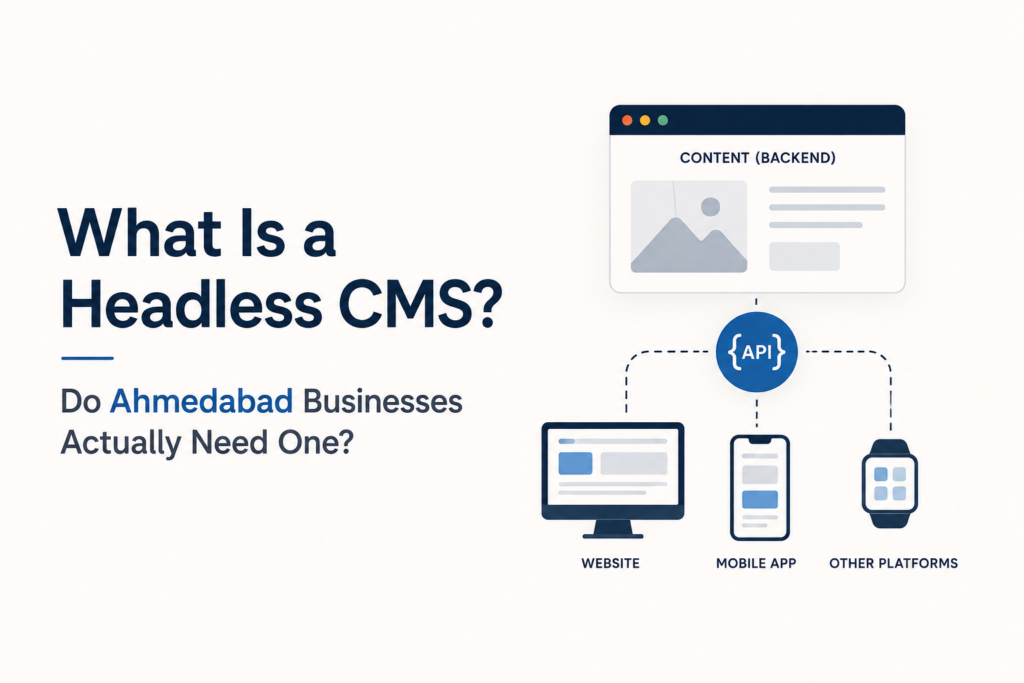
In a traditional CMS like standard WordPress, these two parts are connected. You write a blog post in the backend, and WordPress itself decides how it displays on the frontend, using its themes and templates.
A headless CMS disconnects these two parts. The backend still stores and manages your content, but it doesn’t decide how that content is displayed. Instead, your content gets delivered through an API to whatever frontend you build separately — a custom-coded website, a mobile app, a smart display in your store, anything.
Think of it like this: a traditional CMS is a restaurant where the kitchen also decides how the food is plated and where you sit. A headless CMS is a kitchen that just cooks the food really well and lets you decide the plating, the seating, and the whole dining experience separately.
Why This Approach Exists
Headless CMS setups became popular because larger businesses needed to push the same content to multiple places at once — a website, an app, a kiosk, sometimes even smart devices — without maintaining separate content systems for each one. Global brands and large publishers use headless setups because their content needs are genuinely spread across many platforms.
It also appeals to development teams who want complete freedom over how the frontend is built, without being boxed in by a CMS’s built-in templates.
Where Headless Actually Makes Sense
To be fair to the concept, there are real situations where going headless is the smarter move:
- You’re publishing the same content across multiple platforms. A website, a mobile app, and maybe a partner portal, all pulling from one content source.
- Your frontend needs are highly custom. You want a completely unique, fast, app-like experience that off-the-shelf themes simply can’t deliver.
- You have an in-house or dedicated development team who can build and maintain a custom frontend, since headless setups need more technical upkeep than a standard website.
- Performance at scale is critical — think high-traffic platforms serving thousands of concurrent users, where every millisecond of load time matters commercially.
If any of that sounds like your business, a headless approach is worth a serious conversation.
Where It’s Genuinely Overkill
Here’s the part most agencies won’t tell you upfront: for the vast majority of small and mid-sized businesses in Ahmedabad, a headless CMS solves a problem you don’t actually have.
If you’re a local business — a clinic in Vastrapur, a boutique in CG Road, a manufacturing company with a corporate site, a real estate agency — your real need is usually a website that:
- Loads fast
- Is easy for your team to update without calling a developer every time
- Ranks well on Google for local searches
- Looks professional and converts visitors into enquiries
A well-built traditional CMS (WordPress being the most common) handles all of this perfectly well, at a fraction of the cost and complexity. Going headless typically means:
- Higher development cost, since you’re now building and maintaining two systems instead of one
- More technical dependency, since your team can’t easily make frontend changes without developer involvement
- Longer timelines to launch, since there’s more to build from scratch
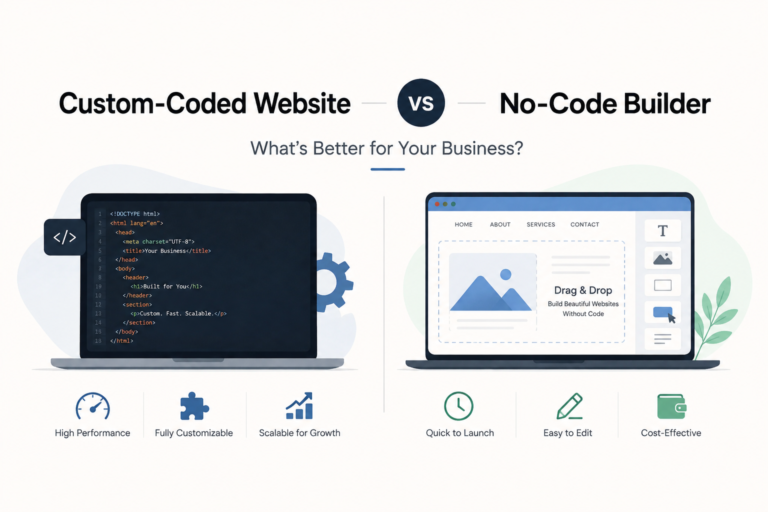
For context, we compared this build approach against simpler options in custom-coded website vs no-code builder — a lot of the same logic applies here. More technical power isn’t automatically better if it’s solving a problem you don’t have.
A Simple Way to Decide
Ask yourself these questions honestly:
Do you need to publish the same content to more than one platform (website + app, for example)? If no, you likely don’t need headless.
Do you have a developer or technical team on retainer to maintain a custom frontend long-term? If no, headless will become a maintenance burden rather than a benefit.
Is your current website’s main problem actually about your CMS, or is it about design, speed, or content strategy? Most of the time, it’s the latter — and none of those require going headless to fix.
If you answered “no” to the first two, a well-optimised traditional CMS setup — like WordPress, built properly — will do everything you need it to do, without the added cost and complexity.
What Most Ahmedabad Businesses Actually Need Instead
In our experience working with local businesses, the “headless vs traditional” debate is rarely the actual bottleneck. The real issues we see are:
- Websites built on outdated themes that load slowly
- No clear content or SEO strategy behind the site
- Backend so cluttered with unnecessary plugins that even simple updates break something
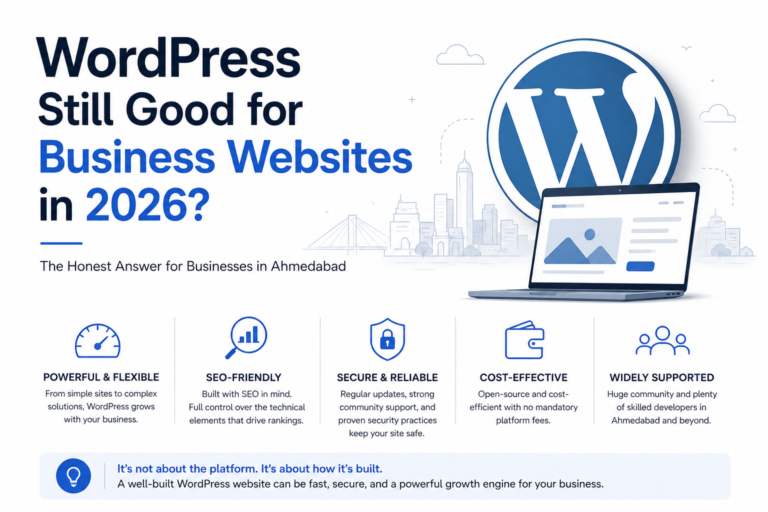
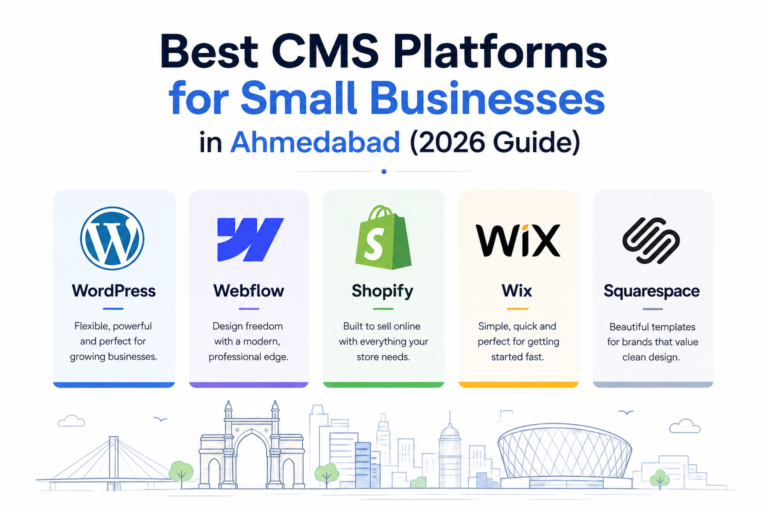
Fixing these doesn’t require a headless setup. It requires a properly built, well-maintained CMS with a clear plan behind it. If you’re exploring your CMS options more broadly, we’ve laid out a comparison in best CMS platforms for small businesses in Ahmedabad, and if you’re weighing WordPress specifically against newer builders, WordPress vs Webflow vs Shopify covers that ground in detail.
The Bottom Line
Headless CMS isn’t a scam or a fad — it’s a genuinely useful architecture for the right business. But “the right business” usually means large-scale platforms with multiple content channels and dedicated technical teams, not a local business trying to get more enquiries from Ahmedabad customers searching on Google.
Don’t let the buzzword pressure you into overbuilding. If someone’s pushing headless on you without first understanding what your business actually needs, that’s worth questioning.
At Bison Media, we start every website project by understanding your business goals first — the technical approach comes after, not before. If you’re unsure whether your project genuinely needs a headless setup or just a well-built traditional website, that’s a five-minute conversation that can save you a lot of unnecessary cost.