If you’ve started looking into building a website, you’ve probably run into the same wall every business owner does: everyone has a strong opinion about which platform is “the best,” and most of those opinions contradict each other.
A developer friend swears by WordPress. Your cousin’s startup uses Webflow and won’t stop talking about it. Your competitor’s online store runs on Shopify and looks great. So which one is actually right for you?
Here’s the honest answer: there isn’t one universally “best” platform. There’s a best platform for your specific business, and that depends on what you’re selling, how much control you want, and how much you’re willing to spend maintaining it long-term. Let’s break down all three properly, without the sales pitch.
First, What Do These Platforms Actually Do?
Before comparing them, it helps to know what each one is built for.
WordPress is a content management system (CMS). It powers roughly 40% of all websites globally, from small local businesses to large news publications. It’s open-source, which means it’s free to use, but you’ll usually need hosting, a theme, and some plugins to get it fully functional.
Webflow is a visual website builder aimed at designers. It gives you a lot of design freedom without needing to write code, and it hosts your website for you as part of the package.
Shopify is built specifically for online stores. If you’re selling physical or digital products, it handles everything from inventory to payment gateways to shipping calculations out of the box.
Already, you can see these three aren’t really direct competitors — they’re built for different jobs. But most business owners get told to “just pick one” without anyone explaining why.
WordPress: The Flexible All-Rounder
WordPress is the platform most Ahmedabad businesses default to, and for good reason. It’s mature, well-documented, and there’s no shortage of developers in Gujarat who know how to work with it.
Where WordPress wins:
- You want full ownership and control of your website, without being locked into one company’s ecosystem
- You need a content-heavy site — think blogs, service pages, resource libraries, or a business that publishes regularly for SEO
- You have (or plan to have) a mix of needs: a blog today, a booking system next year, maybe a small store later
- Budget matters, since the core software is free and hosting in India is affordable
Where it gets tricky:
- WordPress is only as good as how it’s built. A poorly built WordPress site with too many plugins can be slow and vulnerable to security issues
- It needs ongoing maintenance — updates, backups, security checks — which either you or your agency needs to stay on top of
For a CA firm in Navrangpura that wants a professional site with a blog, service pages, and maybe a client portal down the line, WordPress is usually the sensible pick. It grows with you instead of boxing you in.
Webflow: Best for Design-First Brands
Webflow has picked up a lot of attention from design studios and startups over the past few years, and it deserves it for a specific use case: when the visual experience of your website is the product.
Where Webflow wins:
- You’re a design-led brand — architecture firms, interior designers, boutique agencies — where the site needs to look polished and custom, not templated
- You want pixel-level design control without hiring a developer for every tweak
- You want hosting, security, and performance handled for you in one package
Where it gets tricky:
- It comes with a monthly subscription cost that adds up, and switching away later isn’t as simple as exporting your content
- Adding advanced functionality (memberships, complex bookings, multi-language content) often needs third-party tools stitched on top
- Fewer local Ahmedabad developers specialise in Webflow compared to WordPress, so your options for ongoing support are narrower
If you’re a boutique interior design studio in Bodakdev that wants a visually striking portfolio site and isn’t planning to add a blog every week, Webflow can genuinely outperform WordPress on looks with less back-and-forth.
Shopify: Built for Selling Products
If your business is primarily transactional — you’re selling products online — Shopify removes a huge amount of the technical headache.
Where Shopify wins:
- You’re running or launching an online store and want inventory, payments, shipping, and taxes handled without hiring a developer to build it from scratch
- You want reliable uptime and security without managing servers yourself
- You plan to sell across multiple channels — Instagram, WhatsApp catalog, marketplaces — since Shopify integrates with most of them
Where it gets tricky:
- Monthly fees plus transaction charges can eat into margins for smaller stores
- Content-heavy needs (a large blog, resource centre, detailed service pages) aren’t Shopify’s strength — it’s built to sell, not to publish
- Deep customisation outside its app ecosystem can get expensive fast
For a home decor brand in Satellite shipping across Gujarat, or a clothing label doing D2C sales, Shopify is almost always the more sensible starting point over trying to bolt e-commerce onto WordPress.
So Which One Should You Actually Pick?
Here’s a simple way to think about it:
- Selling products online, and that’s your main goal? Go with Shopify.
- Design and brand experience matter more than content volume, and you don’t plan to publish often? Webflow is worth the investment.
- You want flexibility, plan to publish content regularly, and want a website that can grow into different things over time? WordPress is usually the safer long-term bet.
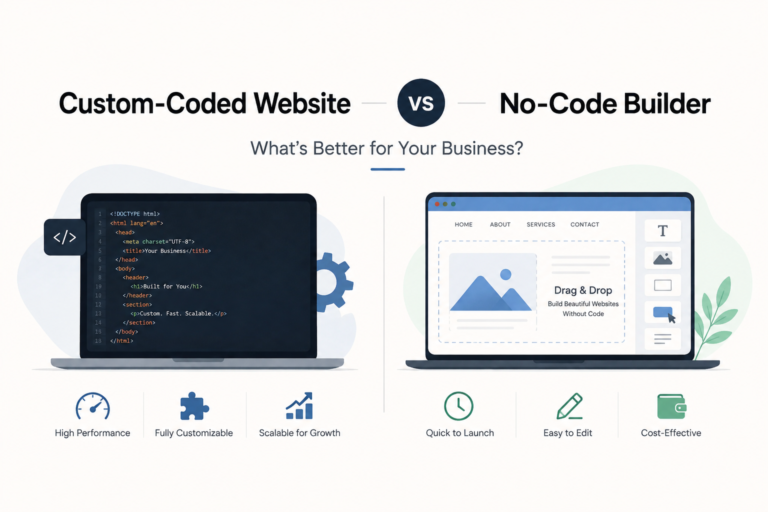
There’s also a fourth option a lot of businesses don’t consider: a fully custom-coded website, which skips pre-built platforms entirely. That’s worth understanding too, especially if you’re outgrowing what page builders can offer — we’ve broken that comparison down separately in custom-coded vs no-code website builders.
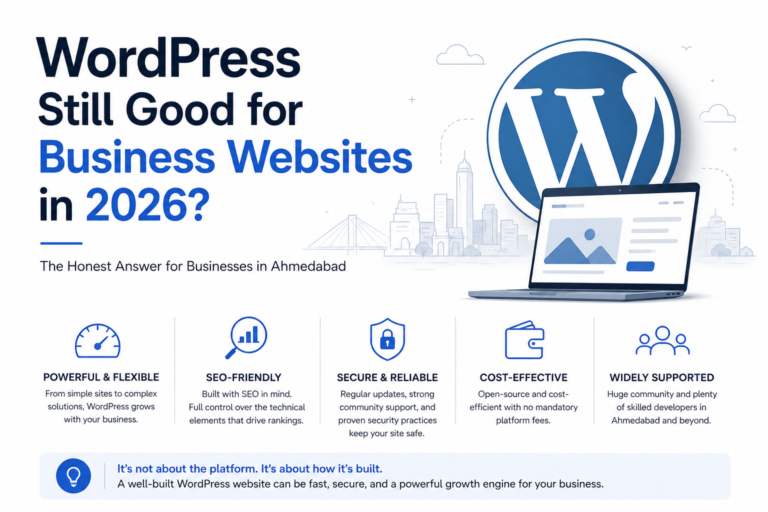
And if you’re leaning toward WordPress specifically, it’s worth knowing that it’s had a bit of a reputation problem in recent years — some businesses assume it’s “outdated” compared to newer builders. We unpacked whether that’s actually true in is WordPress still good for business websites in 2026.
A Word on SEO, Since That’s Usually the Real Goal
Whichever platform you pick, remember the platform itself isn’t what ranks you on Google — how it’s built and maintained is. WordPress, Webflow, and Shopify can all rank well when the site has clean code, fast loading speed, proper structure, and content that actually answers what your customers are searching for.
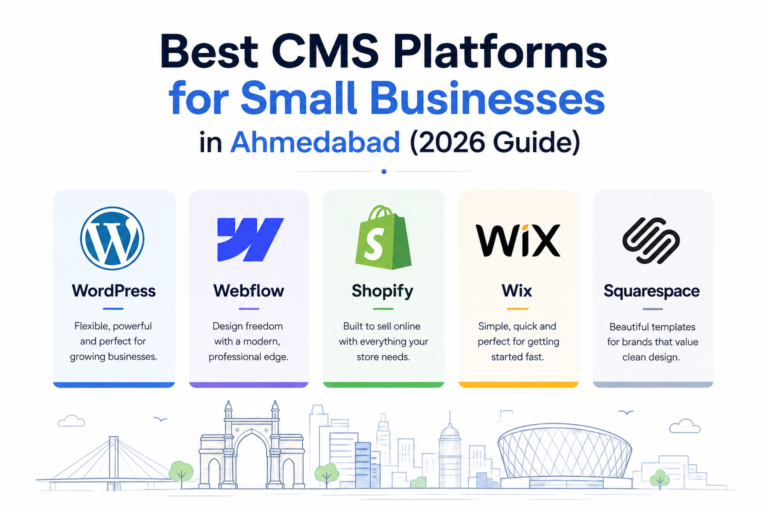
If you’re comparing CMS options more broadly, not just these three, we’ve put together a rundown of the best CMS platforms for small businesses in Ahmedabad that covers a few more options worth knowing about.
The Bottom Line
Don’t pick a platform because it’s trendy or because someone told you it’s “the best.” Pick it based on what your business actually needs to do in the next two to three years — sell products, publish content, look a certain way, or some mix of all three.
If you’re still not sure which fits your business, that’s a conversation worth having before you spend a rupee on development. At Bison Media, we sit down with Ahmedabad businesses regularly to figure out exactly this — no platform bias, just what makes sense for your goals and budget.