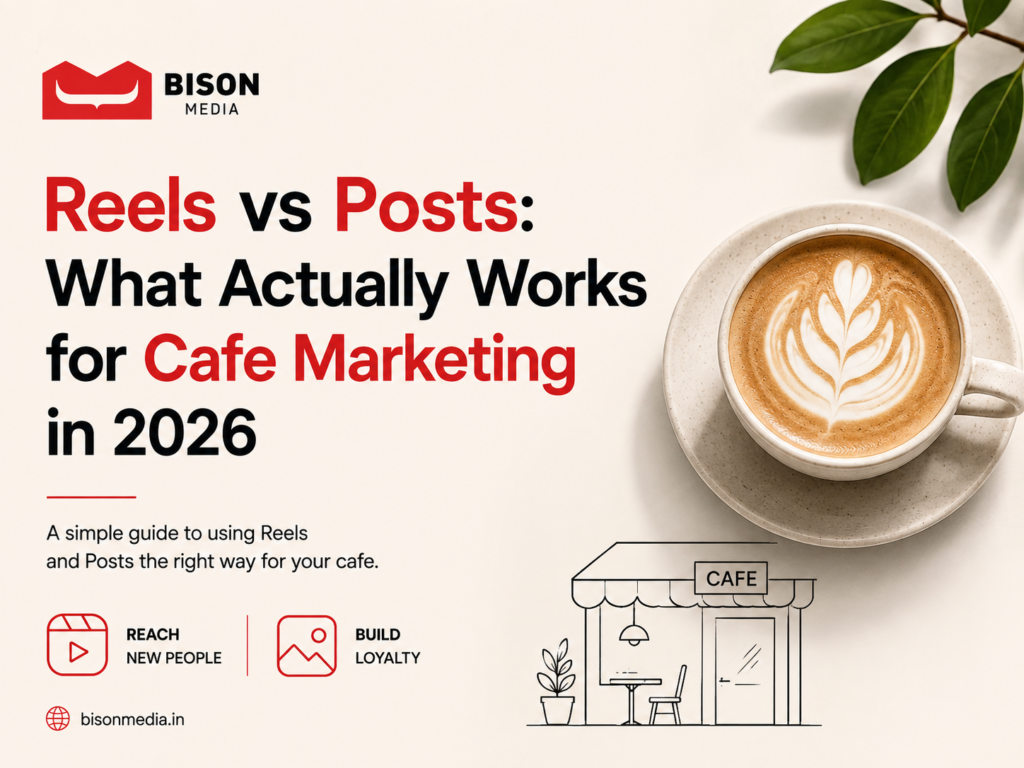
Walk into any cafe in Ahmedabad on a Saturday morning and you’ll spot the same thing happening at three different tables: someone filming their coffee, someone filming the interiors, and someone just filming themselves talking about how good the filter coffee tastes. Every cafe owner knows they “need to be on Instagram.” Almost none of them know whether they should be posting Reels, static posts, or both.
We get asked this question more than almost anything else by cafe and restaurant owners we work with. So let’s settle it properly — not with opinions, but with how the platform actually behaves in 2026, and what that means for a cafe trying to fill tables in a specific neighbourhood.
Why This Question Got More Complicated in 2026
A few years ago, Instagram had one feed and one set of rules. That’s no longer true. Instagram now runs separate ranking systems for your main Feed, the Reels tab, Stories, and Explore — and each one decides what to show people based on different signals. A photo you post doesn’t compete for attention the same way a Reel does, because they’re not even being judged by the same system.
That single shift explains almost every piece of confusing advice you’ve heard. “Reels get more reach” and “carousels get more engagement” are both true — they’re just true for different jobs.
What Reels Actually Do Well for a Cafe
Reels exist to find people who don’t already know you. Instagram pushes Reels into the Explore page and the Reels tab specifically to test them in front of new audiences, based on how well they hold attention in the first few seconds. If someone in your city has never heard of your cafe, a Reel is the format most likely to introduce you to them.
For a cafe, that plays out in very practical ways:
- A 15-second clip of your barista doing latte art, with your cafe’s name and area on screen, can land in front of hundreds of people nearby who follow zero cafes but scroll Reels every day.
- Process and personality content — how you make your cold brew, what a typical morning rush looks like, your dog who sits by the counter — tends to hold attention because it feels unscripted.
- Reels with on-screen text and clean captions travel well even with the sound off, which matters because a large chunk of people scroll on mute.
The trade-off: Reels are built for discovery, not loyalty. A Reel can get you 20,000 views and almost no comments. That’s not a failure — that’s the format doing its job. Its job is to get strangers to notice you exist. Converting them into regulars is a different job, done elsewhere.
Where Static Posts and Carousels Still Win
This is the part most “post more Reels” advice skips. Feed posts and carousels are ranked mostly on your relationship with the people who already follow you — how often they’ve engaged with your account before, how likely they are to save or comment, and whether the post is worth showing them again.
Carousels in particular have a quiet advantage: Instagram can re-serve a later slide to someone who scrolled past the first one, effectively giving one post multiple chances to earn attention from the same viewer. That makes carousels excellent for:
- A “5 things to order if it’s your first time here” style post that people screenshot or save
- Menu updates, new seasonal items, or price changes your regulars actually need to know
- Behind-the-scenes storytelling that builds a relationship rather than chasing strangers
- Anything you want saved and referred back to, since saves are one of the strongest ranking signals on the platform
If Reels are how a stranger finds your cafe, posts and carousels are how that stranger decides to trust it enough to actually walk in — and how your existing regulars stay reminded that you exist every time they open the app.
So Which One “Wins”? Neither — They’re Solving Different Problems
Here’s the honest answer: asking “Reels or posts?” is a bit like asking whether a shop’s signboard or its interior matters more. You need the signboard to get someone through the door. You need the interior to make them stay, order, and come back. A cafe that only posts Reels will get discovered by a lot of people who forget it exists within a day. A cafe that only posts carousels will build a loyal little bubble that never grows beyond people who already follow them.
The cafes we’ve seen actually build a real local following in 2026 tend to run a simple, repeatable mix rather than agonising over which format is “better”:
A realistic weekly rhythm for a busy cafe owner:
- 3 to 4 Reels a week — quick, native-feeling clips: drink-making process, a staff moment, a quick “what’s new” update, or a trending audio adapted to your cafe. Filmed on a phone is fine. Polish matters less than a strong first two seconds.
- 2 to 3 feed posts or carousels a week — save-worthy content: your menu highlights, a “hidden gem in [your area]” style post, customer photos reshared with permission, or a carousel walking through your story.
- Daily or near-daily Stories — low-pressure, high-frequency touchpoints that keep you visible to people who already follow you, without needing to be polished at all.
This mix works because it respects what each format is actually built to do, instead of forcing one format to do a job it’s not designed for.
Mistakes We See Cafe Owners Make Constantly
A few patterns come up again and again with local food and beverage brands:
- Posting only when there’s “news.” Instagram rewards consistency. Long gaps between posts mean the algorithm has less recent behaviour to judge you on, so your existing followers see you less too.
- Reposting the same clip across platforms with a visible watermark. Instagram’s system is increasingly good at spotting recycled content with another app’s watermark, and it noticeably limits how far that content travels. A five-minute re-record without the watermark performs meaningfully better than the original repost.
- Treating captions as an afterthought. Keywords in your caption — your area name, your cafe type, what you serve — now do real work for discovery through Instagram’s own search, not just hashtags.
- No local tagging. If you don’t tag your location and mention your neighbourhood by name in captions, you’re relying entirely on Explore’s guesswork instead of giving the algorithm (and your customers) an obvious local signal.
- Chasing views instead of the visit. A viral Reel that doesn’t lead anywhere — no call to visit, no location tag, no reason to remember your name — is a wasted spike. Every piece of content should make it slightly easier for someone to know where you are and why to come.
What This Means If You’re Running a Cafe in Ahmedabad Right Now
If we had to boil this down to one line: use Reels to get found by your city, and use posts and carousels to turn “found” into “loyal.” Neither format replaces the other, and neither works in isolation the way most generic advice suggests.
The harder part isn’t knowing this — it’s actually doing it every week, in a way that’s specific to your cafe’s personality and your neighbourhood, while you’re also running a business that needs you behind the counter more often than behind a camera.
That’s the gap we help local businesses close at Bison Media. We plan and shoot content calendars built around exactly this Reels-and-posts rhythm, tailored to what’s realistic for a working cafe rather than a content studio — and we pair it with local SEO and social media management so the same effort that gets you discovered on Instagram also gets you found on Google Maps and local search. If you’d rather spend your Saturday mornings talking to customers than figuring out posting strategy, that’s a conversation worth having with us.