
You’ve decided to hire a social media marketing agency. Good. That’s usually the right call once you realize your Instagram is being run by whoever has five free minutes on a Tuesday and your “content strategy” is basically vibes.
But here’s the part nobody tells you: choosing the wrong agency is worse than doing nothing at all. You’ll pay someone a few thousand dollars a month to post generic quote graphics, ignore your comments, and send you a “results report” full of vanity metrics that mean nothing to your bottom line. Then you’ll conclude social media “doesn’t work for your industry,” when really, you just hired the wrong people.
So let’s skip the fluff and get into what actually matters when you’re picking an agency.
Start With What You Actually Need, Not What Sounds Impressive
Every agency pitch deck looks the same: stock photos of diverse teams laughing at laptops, a client logo wall, and a promise to “elevate your brand.” None of that tells you if they can do the one thing you’re paying for.
Before you take a single call, get specific about what you need:
- Do you need brand awareness, or do you need leads and sales?
- Do you need someone to just post consistently, or do you need actual strategy?
- Is this a short-term push (a launch, an event) or a long-term retainer?
- Do you need paid ads managed too, or organic content only?
An agency that’s great at building viral TikTok content for a skincare brand might be completely wrong for a B2B software company that needs LinkedIn thought leadership and lead gen. “Good at social media” isn’t a real qualification. Good at social media for businesses like yours is what you’re actually shopping for.
Ask to See Real Work, Not Just Case Studies
Case studies are marketing. Of course they look good — the agency wrote them. What you want is the raw, unfiltered version.
Ask for:
- Live accounts they currently manage (not just screenshots)
- At least one account in your industry or a comparable one
- Engagement numbers, not just follower counts — anyone can buy followers, nobody can fake real comments and shares consistently
Go look at those accounts yourself. Read the actual comments. Are people responding to the brand, or is it crickets under every post? Does the content feel like it was made by someone who understands the audience, or does it feel like a template with the logo swapped out?
This single step filters out more bad agencies than any sales call ever will.
Understand How They Define and Report Success
This is where most agencies get exposed. Ask directly: “How will I know this is working?”
If the answer is impressions, reach, and follower growth — be careful. Those numbers are easy to hit and easy to hide behind. They can look great on a slide while your actual business results stay flat.
A good agency will talk about metrics tied to your goals: conversion rate, cost per lead, click-through rate, actual revenue attribution where it’s trackable, or at minimum, a clear line between content and business outcomes. They should also be upfront about what social media can’t do. If someone promises guaranteed viral growth or a specific follower count by a specific date, that’s not confidence — that’s a red flag. Nobody controls a platform’s algorithm that precisely, and anyone claiming otherwise is selling you a fantasy.
Also ask how often you’ll get reports, and ask to see a sample one. If it’s dense with charts but light on “here’s what we’re doing differently next month,” that’s a problem. Reporting should lead to decisions, not just decoration.
Figure Out Who’s Actually Going to Do the Work
Here’s an uncomfortable truth in this industry: you often get sold by one team and served by another. The senior strategist who impresses you on the discovery call might disappear the moment you sign, handing you off to a junior account manager who’s juggling fifteen other clients.
Ask plainly:
- Who will be my main point of contact after I sign?
- Who actually creates the content — in-house team or freelancers?
- How many other accounts does that person or team manage?
There’s no perfect number here, but if one person is “strategizing” for 20+ accounts, you’re not getting strategy. You’re getting a rotation of recycled ideas with your logo pasted on top.
Talk About Communication Before You Need To
You’ll find out how an agency communicates the first time something goes wrong — a post underperforms, a comment section turns hostile, a campaign needs a fast pivot. Don’t wait until that moment to learn how responsive they are.
During the sales process, pay attention to:
- How fast they reply to your emails or messages, even before you’re a paying client
- Whether they explain things clearly or bury you in jargon to sound smart
- Whether they ask questions about your business, or just talk about themselves
If they’re slow and vague before they have your money, that behavior doesn’t magically improve after the contract is signed. It usually gets worse.
Get Clear on Ownership of Your Content and Data
This one gets overlooked constantly, and it can bite you hard later. When you eventually leave the agency — and at some point, you likely will — what do you walk away with?
Make sure the contract is clear on:
- You own your social media accounts and passwords, full stop, not the agency
- You get access to all content created, including raw files, not just published posts
- You keep access to analytics and ad account data
- There’s a clear, reasonable exit clause, not a contract that traps you for a year with no way out
If an agency is cagey about handing over account ownership or acts like your Instagram is somehow theirs, walk away. That’s not a partner, that’s a hostage situation waiting to happen.
Price Isn’t the Enemy — Vague Pricing Is
Cheap agencies aren’t automatically bad, and expensive agencies aren’t automatically good. What actually matters is whether the pricing makes sense for what’s included.
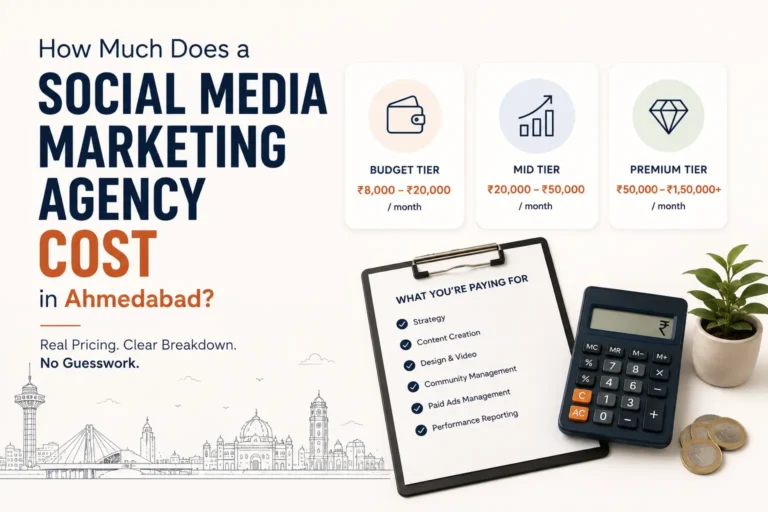
Watch for vague packages like “social media management — $1,500/month” with no breakdown of what that covers. How many posts? Which platforms? Does it include community management, replying to DMs and comments, paid ad spend management, content creation, strategy calls?
A trustworthy agency can break down exactly what you’re paying for. If you ask “what does this include” and get a vague answer or a shrug dressed up in nice language, that’s your signal to keep looking.
Trust the Chemistry, But Verify Everything Else
At the end of the day, you’re going to be talking to these people regularly, sharing your business goals, and trusting them with your brand’s public voice. If a team feels dismissive, overly salesy, or like they’re not really listening to your business, that discomfort is worth paying attention to.
But don’t let good chemistry alone override due diligence. The nicest, most personable team can still lack the actual skill to deliver results. Use chemistry as a tiebreaker between agencies that have already proven their competence — not as the deciding factor on its own.
The Real Bottom Line
The right agency isn’t the one with the flashiest pitch deck or the biggest client logos. It’s the one that asks about your business before talking about themselves, shows you real, verifiable work, ties their reporting to outcomes that actually matter to you, and is upfront about what social media realistically can and can’t do for you.
Take your time with this decision. A bad agency doesn’t just waste your money — it wastes months you can’t get back, and it can leave your brand’s social presence worse than when you started. A good one, on the other hand, becomes one of the most valuable relationships in your business.
Ask the hard questions early. The right agency won’t flinch at any of them.